Case Study
ArcheionOS
A backoffice operating system for managing clients, projects, billing, contracts, automations, email, portals, and operational records.
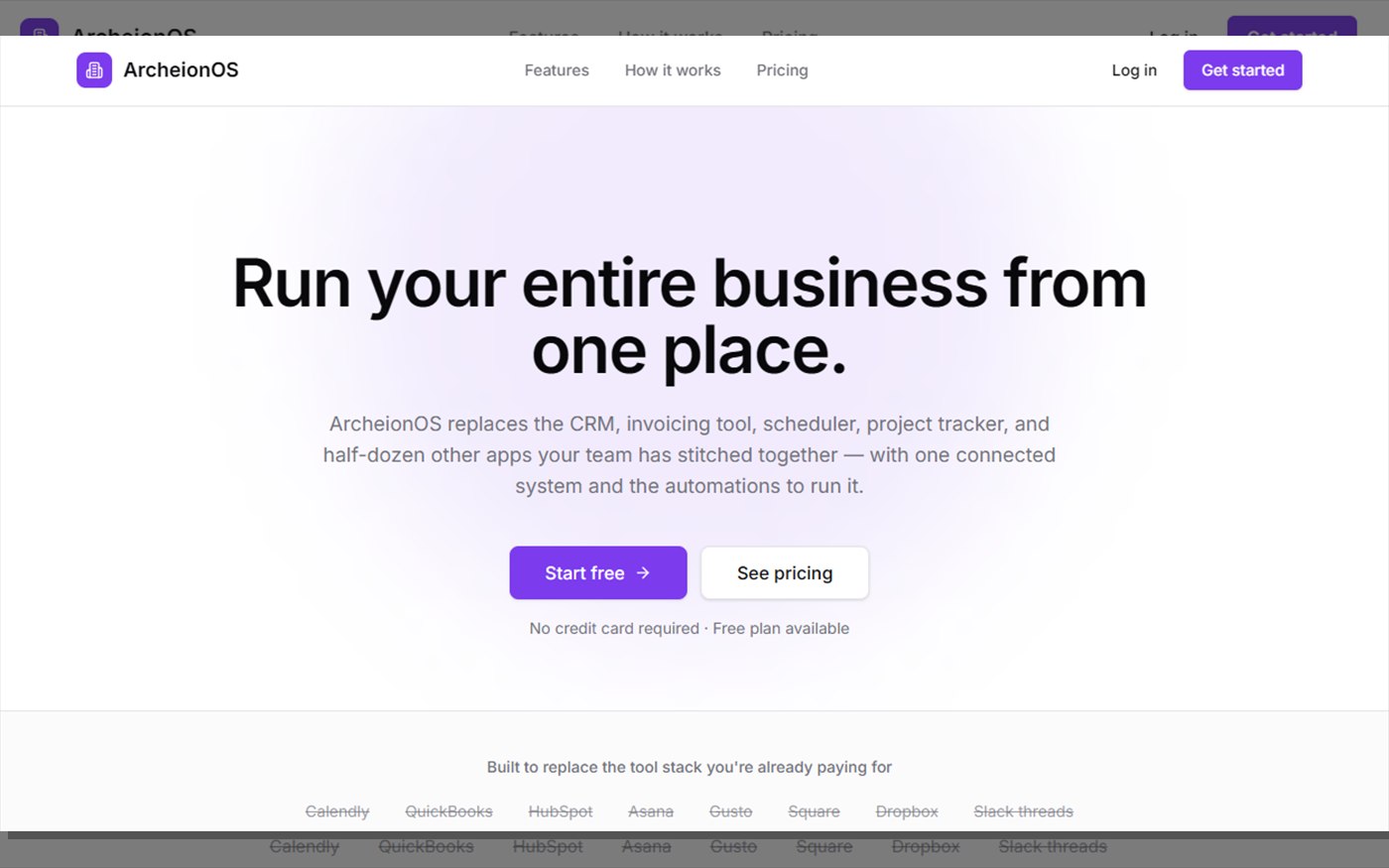
- •Modeled a full backoffice data layer for organizations, clients, invoices, estimates, projects, tasks, contracts, and automations.
- •Connected core business workflows across client management, billing, project delivery, email, and portal access.
- •Added email templates for invites, invoices, payment reminders, booking confirmations, and welcome flows.
- •Created an operating-system foundation for service businesses that need their admin tools to work together.
Problem
Service businesses often outgrow generic admin tools because client records, billing, projects, contracts, email, and portals all live in different systems. ArcheionOS was designed to bring those backoffice workflows into one operating system.
Approach
The approach was to model the business around connected records instead of isolated features. Organizations, users, clients, projects, tasks, invoices, estimates, contracts, automations, email accounts, and portal access are treated as parts of one operational graph.
Build
The backoffice build includes database packages, authentication, organization roles, client records, billing models, estimates, invoices, projects, task assignments, time entries, contracts, portal tokens, automation runs, approval workflows, and transactional email templates through Resend.
Results
ArcheionOS creates a foundation for a serious backoffice platform. It gives businesses a path to manage operations from one system and creates room for AI, automation, reporting, and client-facing workflows to build on top of shared data.
Start a discovery assessment and we’ll map the public experience, business console, workflows, integrations, and first useful release.
Start Assessment →Business framing
Problem
The business needed more than a marketing website. The platform had to support customer activity, content, operational visibility, and ongoing management.
Solution
CEL3 shaped the public experience and supporting platform architecture so the client could manage the business with fewer disconnected tools.
Business Impact
The result is a centralized system that gives the client more control over daily operations and creates a stronger foundation for future workflow and AI features.